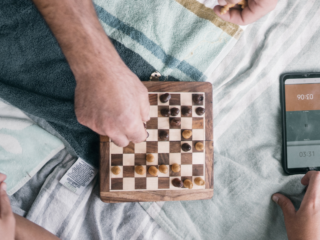
Solo chess practice has a rich history, gaining momentum as players seek alternative ways to hone their skills. The trend reflects the growing popularity of solo chess, with enthusiasts embracing solitary practice sessions for its flexibility and focused challenge.
Engaging in solo play offers a myriad of benefits, from enhancing strategic thinking to sharpening problem-solving abilities.
As the allure of practicing chess alone continues to captivate players worldwide, it’s evident that this method provides an invaluable opportunity for self-improvement and mastery of the game.

Chess Training Purposes
The actual game of chess is an excellent way to improve skill level in so many different areas. Playing chess is great for cognitive skills, learning different strategies, helping improve good memory skills, learning chess tactics that help with critical thinking, learning how to recover from your own mistakes, and effective ways to learn stress strategy for a solo game or a full game with friends.
Understanding Solo Chess and Its Benefits
Mental Benefits
Practicing chess alone offers numerous mental benefits. It allows players to focus on their individual skills, strategies, and decision-making abilities without external influences. This form of practice enhances concentration, critical thinking, and problem-solving skills.
By playing solo chess regularly, individuals can improve their cognitive functions such as memory, attention span, and analytical reasoning.
For example, when a player is faced with various possible moves in a game of solo chess, they are required to analyze the consequences of each move before making a decision.
Solo chess also provides an opportunity for self-improvement by allowing players to reflect on their past games and learn from their mistakes. This reflective process fosters personal growth and development by identifying areas that require improvement or further understanding.
Improving Decision-Making Skills
Engaging in solo play enables individuals to enhance their decision-making skills. As they navigate through different game scenarios independently, players must evaluate the potential outcomes of each move before making a choice.
This process encourages them to think critically about the consequences of their decisions within the context of the game’s progression.
Moreover, practicing chess alone allows individuals to develop patience and strategic planning abilities as they carefully consider each move’s impact on the overall game strategy.
Setting Up for Effective Solo Chess Play
Choosing the Right Playing Environment
Creating the perfect environment is crucial when practicing chess alone. Find a quiet, well-lit area with minimal distractions. A comfortable chair and a spacious table are essential for setting up your chessboard.
Ensure that the lighting in your playing space is adequate to see the board clearly. Natural light or a bright desk lamp can be beneficial for long hours of focused play.
By choosing an appropriate environment, you can concentrate better and improve your skills effectively.
Organizing Your Chess Space for Efficiency
Organizing your chess pieces neatly on the board before starting each game helps in visualizing potential moves more efficiently. Keep all necessary resources nearby, such as chess books or online tutorials, to refer to during practice sessions.
Having a clear and uncluttered space allows you to focus solely on improving your game without any unnecessary distractions.
This organized approach enables you to develop strategic thinking and enhance decision-making skills while playing solo chess.
Utilizing Resources for Solo Play
Utilize various resources available at hand, such as chess puzzles, online platforms offering solo play options, or even computer programs designed for practicing alone. These resources provide ample opportunities to challenge yourself and learn new strategies independently.
Mastering Solo Chess Strategies and Tactics
Studying Classic Chess Games
Studying classic chess games is important for anyone looking to improve their solo play. By analyzing past grandmasters’ moves, players can gain valuable knowledge about various strategies and tactics.
For instance, studying games played by legendary chess players like Garry Kasparov or Bobby Fischer can provide insights into different opening moves, mid-game maneuvers, and endgame techniques.
It’s like having a virtual coach, guiding you through the thought process behind each move. For example, learning how these experts navigated complex situations on the board can help sharpen your own strategic thinking.
Observing their critical decision-making process, you can better understand how to approach similar scenarios in your games.
Learning Opening Strategies
Learning different opening strategies is crucial. Understanding various openings such as the Sicilian Defense or Ruy Lopez allows players to diversify their gameplay and adapt to different types of positions on the board. This enhances not only their ability to survive but also thrive during solo matches.
For instance, mastering multiple opening strategies gives players more flexibility during games. They can choose an opening that suits their style while keeping opponents guessing about their next move.
Learning popular openings helps in recognizing patterns and making informed decisions based on previous knowledge.
Analyzing and Improving Your Solo Chess Game
Recording and Reviewing
Recording your solo chess games can be beneficial. It allows you to review your moves and decisions. By analyzing these recordings, you can identify patterns in your gameplay.
Reviewing the recorded games helps you spot any recurring mistakes or missed opportunities. For instance, if you notice that you frequently overlook a certain type of move, it highlights an area for improvement.
Identifying Weaknesses
Identifying weaknesses is crucial in improving your solo chess game. By reviewing your recorded games, you can pinpoint specific areas where you tend to struggle or make errors consistently.
You might notice that you often struggle with endgame strategies or have difficulty defending against certain types of attacks. Recognizing these weaknesses enables you to focus on them during practice sessions.
Implementing Improvements
Once weaknesses are identified through self-analysis, implementing improvements becomes essential. For example, if your endgame strategies are weak, dedicate more time to practicing different endgame scenarios alone.
Utilizing Chess Technology for Solo Practice
Online Resources
When playing chess alone, utilizing chess apps and software can be highly beneficial. These resources provide a convenient way to practice without needing a physical chessboard or an opponent. You can easily access these tools on your computer or download them onto your device.
Chess apps offer various features such as solo play modes, tutorials, and the ability to challenge virtual opponents of different skill levels.
They provide an array of benefits including learning new strategies, analyzing your games, and tracking your progress over time.
In addition to apps, numerous websites offer interactive chess puzzles and exercises. These platforms allow you to sharpen your skills by solving tactical challenges and practicing specific techniques in a solo setting.
Incorporating Chess Puzzles
Incorporating chess puzzles into your routine is an effective way to enhance your skills when playing alone. Solving puzzles helps improve critical thinking, pattern recognition, and decision-making abilities essential for successful gameplay.
By regularly engaging with chess puzzles, you can develop a deeper understanding of various tactics such as forks, pins, skewers, and discovered attacks. This form of practice also enables you to familiarize yourself with diverse board positions and refine your ability to calculate moves ahead.
Utilizing technology-based resources for solo practice offers convenience and allows players to continuously hone their skills through engaging activities tailored specifically for individual improvement.
Developing a Winning Mindset in Solo Chess
Importance of Mental Preparation
Practicing chess alone requires strong mental preparation. It’s crucial to focus on developing strategies and tactics without the immediate feedback of an opponent. This type of practice helps players enhance their critical thinking skills, spatial awareness, and decision-making abilities.
Solo chess also allows players to simulate various scenarios and challenges they might encounter during actual gameplay.
By mentally preparing for these situations, individuals can strengthen their problem-solving skills and develop effective counter-strategies.
Overcoming Challenges and Setbacks
In solo practice, it’s common to face challenges that can lead to setbacks or frustration. However, overcoming these obstacles is essential for personal growth as a chess player.
For example, if a certain strategy repeatedly fails during solo play, it presents an opportunity to analyze the weaknesses in that approach and devise alternative plans.
By persistently tackling these challenges through solo practice sessions, players can build resilience and adaptability—important qualities for success in competitive chess environments.
Cultivating a Positive Mindset
Maintaining a positive mindset is key when practicing chess alone. It involves staying focused on improvement rather than solely winning or losing games. Embracing mistakes as learning opportunities fosters continuous development.
Furthermore, setting achievable goals within each solo session encourages progress while preventing discouragement from overwhelming long-term objectives.
Progress Tracking and Evaluation in Solo Play
Establishing Goals
Setting progress goals is essential for improving at solo chess. You can focus on specific skills like openings, tactics, or endgames. For example, you might dedicate more time to studying different chess openings.
It’s important to be realistic about the plans you make. If you’ve struggled with a particular tactic in the past, your goal could be to improve your success rate with that tactic within a certain timeframe.
Tracking Performance Metrics
Tracking your performance metrics helps identify areas for improvement. For instance, if you notice that you’re spending too much time on certain moves during practice games, it may indicate a need to work on quicker decision-making.
Keeping track of the number of games won or lost over several sessions can also help gauge overall progress.
By noting down the outcomes of each game, you’ll have a clear record of how many times you’ve succeeded or failed in applying new strategies or concepts.
Evaluating Progress through Self-Assessment
Regular self-assessment is crucial for evaluating progress accurately. After each practice session, take some time to reflect on what went well and which areas need more work. This kind of reflection will help pinpoint where your efforts should be focused next time.
Self-assessment also involves comparing your current performance against past performances. This comparison will give insight into whether there has been any noticeable improvement over time.
Conclusion on Enhancing Chess Skills Alone
In conclusion, practicing chess alone can significantly enhance one’s skills and overall performance. By understanding the benefits, setting up effective strategies, mastering tactics, analyzing and improving gameplay, utilizing technology, and fostering a winning mindset, players can elevate their solo chess experience.
Progress tracking and evaluation further contribute to continuous improvement. Embracing solo chess hones individual abilities and cultivates resilience and strategic thinking.
Implementing the insights shared in this guide can lead to substantial progress for those seeking to advance their chess prowess independently. Regular practice, combined with thoughtful analysis and a proactive approach to skill development, is key to unlocking one’s full potential in solo chess play.
Is solo chess practice effective for improving skills?
Solo chess practice is highly effective for skill improvement. It allows players to focus on strategic thinking, decision-making, and analyzing different game scenarios without the pressure of an opponent. This method helps in honing individual skills and understanding the nuances of the game.
How can technology be utilized for solo chess practice?
Technology can enhance solo chess practice by providing access to online tutorials, interactive puzzles, and computer simulations. Chess apps and software also offer opportunities for analyzing games, studying openings, and practicing against AI opponents.
These tools complement traditional methods and provide valuable insights into one’s gameplay.
What are some strategies for tracking progress in solo play?
Tracking progress involves keeping a record of wins/losses, time spent on specific tactics or positions, identifying patterns of mistakes through self-analysis or using software tools like notation programs or databases. Reviewing past games helps in evaluating improvements over time.
Can beginners benefit from solo chess practice?
Yes, beginners can greatly benefit from solo chess practice as it allows them to grasp fundamental concepts such as piece movement, basic tactics, opening principles through repetitive drills and exercises. It provides a platform to build confidence before engaging in actual gameplay with opponents.
Learning chess strategy can help to put a fresh perspective on this great game, and there is no shortage of people who enjoy learning new ways to play and learn the rules of chess.
How does one develop a winning mindset while practicing alone?
Developing a winning mindset involves setting clear goals for improvement; maintaining discipline during training sessions; learning from losses rather than being discouraged by them; seeking feedback from resources such as books or videos; staying motivated by focusing on gradual progress rather than immediate results.
Playing chess alone is a great way to build strong players in a fantastic way while learning new chess moves. These skills can be used in real life and solo chess players can learn the best practices to study chess and use during play.